Give Core Alliance Spine and Orthopedics a phone call at 516-588-7731 Contact Us

Knee Arthroscopy Minimally Invasive Solutions for Knee Pain and Injury

At Core Alliance, we understand how debilitating knee pain and instability can be. Whether you're recovering from an injury or managing chronic joint degeneration, Dr. Aron Rovner offers advanced knee arthroscopy to help restore function and reduce pain. This minimally invasive procedure allows for targeted treatment with less trauma to surrounding tissues. Schedule your consultation with Core Alliance to explore your options for expert knee care.

Man running

What Is Knee Arthroscopy?

Knee arthroscopy is a minimally invasive surgical technique used to diagnose and treat a wide range of knee conditions. Instead of making large incisions, the surgeon creates small portals through which a thin instrument called an arthroscope is inserted. This tool contains a camera that transmits real-time images to a monitor, allowing for precise visualization and treatment of internal structures. This approach is especially effective for addressing soft tissue injuries, cartilage damage, and structural abnormalities in the knee. Procedures such as meniscus repair, ACL reconstruction, and removal of inflamed synovial tissue can all be performed arthroscopically. Because the technique minimizes trauma, it also typically results in faster recovery times and fewer complications than open surgery.


Benefits of Knee Arthroscopy

This advanced procedure offers a number of important advantages for patients seeking relief from knee pain and dysfunction:

  • Minimally Invasive Access: Knee arthroscopy uses small incisions, which results in less tissue disruption and reduced post-operative pain.
  • Faster Recovery: Most patients experience a shorter recovery time and quicker return to normal activities compared to traditional open surgery.
  • Precise Diagnosis: The use of a high-definition arthroscope provides real-time visualization, enabling accurate assessment of internal joint structures.
  • Targeted Treatment: The procedure allows for highly specific repairs, including addressing meniscus tears, ligament injuries, and cartilage damage.
  • Lower Risk of Complications: Smaller incisions and less trauma reduce the risk of infection, blood loss, and scarring.
  • Outpatient Procedure: Knee arthroscopy is typically performed in an outpatient setting, so you can go home the same day.
Background media

Who Is a Good Candidate for Knee Arthroscopy?

Knee arthroscopy is often recommended for individuals who have not found relief from conservative treatments such as physical therapy, medications, or injections. Ideal candidates may be experiencing persistent knee pain, instability, swelling, or limited range of motion due to an injury or degenerative condition. 

Common indications include torn meniscus, ACL injuries, cartilage damage, and inflamed joint linings.

A thorough consultation with Dr. Rovner will determine whether knee arthroscopy is appropriate for your specific case.

Your Consultation

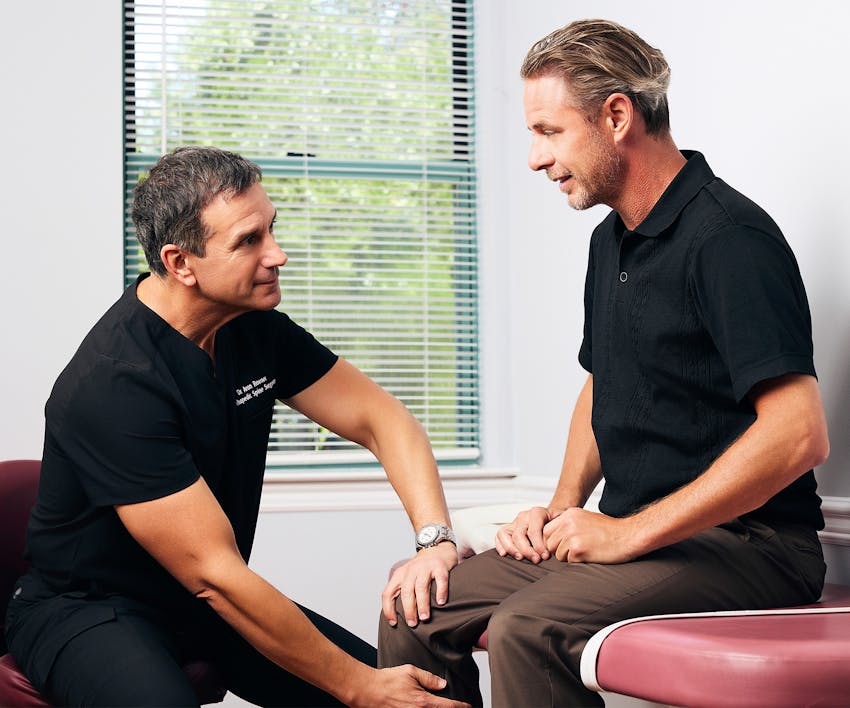
During your consultation at Core Alliance, Dr. Rovner will conduct a detailed physical examination and review your medical history. You have the option of scheduling a virtual or in-person consultation. Imaging studies, such as X-rays or MRIs, may be used to further evaluate the condition of your knee. Based on these findings, a personalized treatment plan will be developed to determine whether knee arthroscopy is the right course of action for you.

Contact Us

“I’m very pleased with Dr. Rovner and his staff. My experience with Dr. Rovner is always very easy and pleasant. I would recommend using his services in the future.”

– Mark A.

Quote media

Schedule A Consultation Tailored Solutions for Every Spine

Contact Us

What to Expect During Knee Arthroscopy

Knee arthroscopy is performed under local, regional, or general anesthesia, depending on your specific needs. Once the area is numbed, small incisions are made around the knee. Through these portals, the arthroscope and specialized surgical instruments are inserted. Dr. Rovner uses the camera to inspect the inside of the knee joint and identify the exact source of the problem. Once the diagnosis is confirmed, the necessary surgical repairs are made using precision-guided tools. The procedure usually takes between 30 and 90 minutes. After surgery, the incisions are closed with sutures or surgical tape, and a sterile dressing is applied. You’ll spend a short time in the recovery area before being discharged with post-operative instructions.

What Is the Recovery Like After Knee Arthroscopy?

Recovery from knee arthroscopy is generally quicker and less painful than traditional open surgery. Most patients can bear weight shortly after the procedure and resume light activity within a few days. Swelling and discomfort are common but manageable with medication and ice. 

Physical therapy often begins soon after surgery to help restore strength, flexibility, and mobility.

Full recovery depends on the extent of the procedure and your overall health, but most patients see substantial improvement within 4 to 6 weeks. Dr. Rovner and the Core Alliance team will monitor your progress closely to ensure the best possible outcome.

Background media

How Much Does Knee Arthroscopy Cost?

The cost of knee arthroscopy varies based on factors like facility fees, anesthesia, and insurance coverage. At Core Alliance, we provide transparent pricing and work closely with your insurer to help you understand your options.

dumbbells on a rack

Alternatives to Knee Arthroscopy

Before recommending surgery, Dr. Rovner may explore non-surgical treatments, including physical therapy, bracing, corticosteroid injections, and regenerative options like PRP or stem cell therapy. If knee arthroscopy is not appropriate for your condition, alternative surgical options or conservative management may be advised.

Banner media

Focus Areas in Knee Arthroscopy

Knee arthroscopy can be used to perform several targeted procedures depending on your specific injury or condition:

Man playing pickle ball
Meniscectomy

Meniscectomy

This procedure removes damaged portions of the meniscus to relieve pain and improve mobility when a full repair is not feasible.

Dr. Krovner with patient
Meniscal Repair

Meniscal Repair

A torn meniscus can sometimes be sutured and healed using arthroscopic techniques, particularly in younger patients or when the tear is located in a vascular region.

man smiling
ACL Reconstruction

ACL Reconstruction

Using arthroscopic guidance, a torn anterior cruciate ligament can be reconstructed with a tendon graft to restore knee stability and function.

woman sitting on bench
ACL Repair

ACL Repair

In certain cases, especially with proximal tears, the ACL can be repaired directly rather than reconstructed.

Doctor media

Why Choose Core Alliance?

At Core Alliance, we specialize in patient-centered orthopedic care with a strong emphasis on minimally invasive surgical solutions. Dr. Aron Rovner is a board-certified, fellowship-trained orthopedic spine and sports surgeon with decades of experience in joint preservation and recovery. We use the latest techniques and technology to help you heal faster and move better. Schedule your consultation today to get started on the road to recovery.

Frequently Asked Questions Knee Arthroscopy

Will I need physical therapy after knee arthroscopy?

Yes, physical therapy plays an important role in the recovery process and helps restore range of motion, strength, and function.

How soon can I return to work or sports after knee arthroscopy?

Most patients return to office work within a few days and resume athletic activities between 4 and 6 weeks, depending on the type of repair performed.

Are there any risks associated with knee arthroscopy?

While considered very safe, there are small risks of infection, bleeding, or blood clots, which Dr. Rovner will discuss with you before surgery.

Will I need to use crutches after the procedure?

Crutches may be recommended for a few days after surgery, especially if weight-bearing is limited during early recovery.

Is knee arthroscopy covered by insurance?

In most cases, yes. Core Alliance will help verify your insurance benefits and explain any out-of-pocket costs.

Contact us media
Accessibility: If you are vision-impaired or have some other impairment covered by the Americans with Disabilities Act or a similar law, and you wish to discuss potential accommodations related to using this website, please contact our Accessibility Manager at 516-588-7731.
Contact Us