Give Core Alliance Spine and Orthopedics a phone call at (516) 588-7731 Contact Us

MIS TLIF Minimally Invasive Spine Surgery for Long Island Patients

At Core Alliance Spine and Orthopedics, we offer evidence-based solutions for chronic spine conditions that impact daily life. Minimally Invasive Transforaminal Lumbar Interbody Fusion (MIS TLIF) is a specialized procedure that stabilizes the lumbar spine, reduces nerve pressure, and improves function—without the trauma of traditional open surgery.

Patients seeking MIS TLIF in Long Island benefit from our precision-driven techniques and patient-centered care. Dr. Aron Rovner, a board-certified, fellowship-trained spine surgeon with more than 20 years of experience, leads each treatment plan with your long-term health in mind. Schedule your consultation to find out whether this procedure is right for you.

What Is Minimally Invasive Transforaminal Lumbar Interbody Fusion?

MIS TLIF is a modern spinal fusion procedure that treats lower back pain caused by structural spine issues like herniated discs, instability, or nerve compression. The surgery involves removing a damaged disc between lumbar vertebrae and replacing it with an implant—also called a cage—filled with bone graft material to encourage fusion. The term “minimally invasive” refers to the surgical technique, which uses small incisions and tubular retractors to access the spine with minimal disruption to surrounding muscles and tissues.

 “Transforaminal” describes the specific path the surgeon takes, entering through the foramen (the space where nerves exit the spinal canal) on one side of the spine. Once the implant is placed, screws and rods are inserted to hold the vertebrae in place while the fusion develops. This approach delivers the benefits of fusion while reducing surgical trauma and improving the healing process.

Benefits of MIS TLIF

Patients undergoing MIS TLIF in Long Island often experience several important benefits over traditional open fusion surgeries:

  • Minimized muscle damage: Smaller incisions and tubular access tools help preserve surrounding muscle integrity.
  • Faster recovery time: Most patients return to light activity sooner than with open spine surgery.
  • Reduced postoperative pain: Less tissue disruption means less inflammation and discomfort during healing.
  • Shorter hospital stays: Many patients return home the same day or within 24 hours.
  • Lower risk of infection and complications: Smaller incisions reduce surgical exposure and bleeding.
  • Improved spinal stability: The procedure restores alignment and helps prevent further degeneration.

Banner media
woman smiling

Who Is a Good Candidate for MIS TLIF?

You may be a strong candidate for minimally invasive transforaminal lumbar interbody fusion in Long Island if you have chronic lower back pain that has not improved with conservative treatment. Common conditions treated with MIS TLIF include:

  • Degenerative disc disease
  • Spinal stenosis
  • Recurrent disc herniation
  • Spondylolisthesis

Candidates should be in generally good health, with imaging showing a clear source of instability or nerve compression. Dr. Rovner will assess your symptoms, medical history, and diagnostic studies to determine if MIS TLIF is appropriate for your situation.

Your Consultation

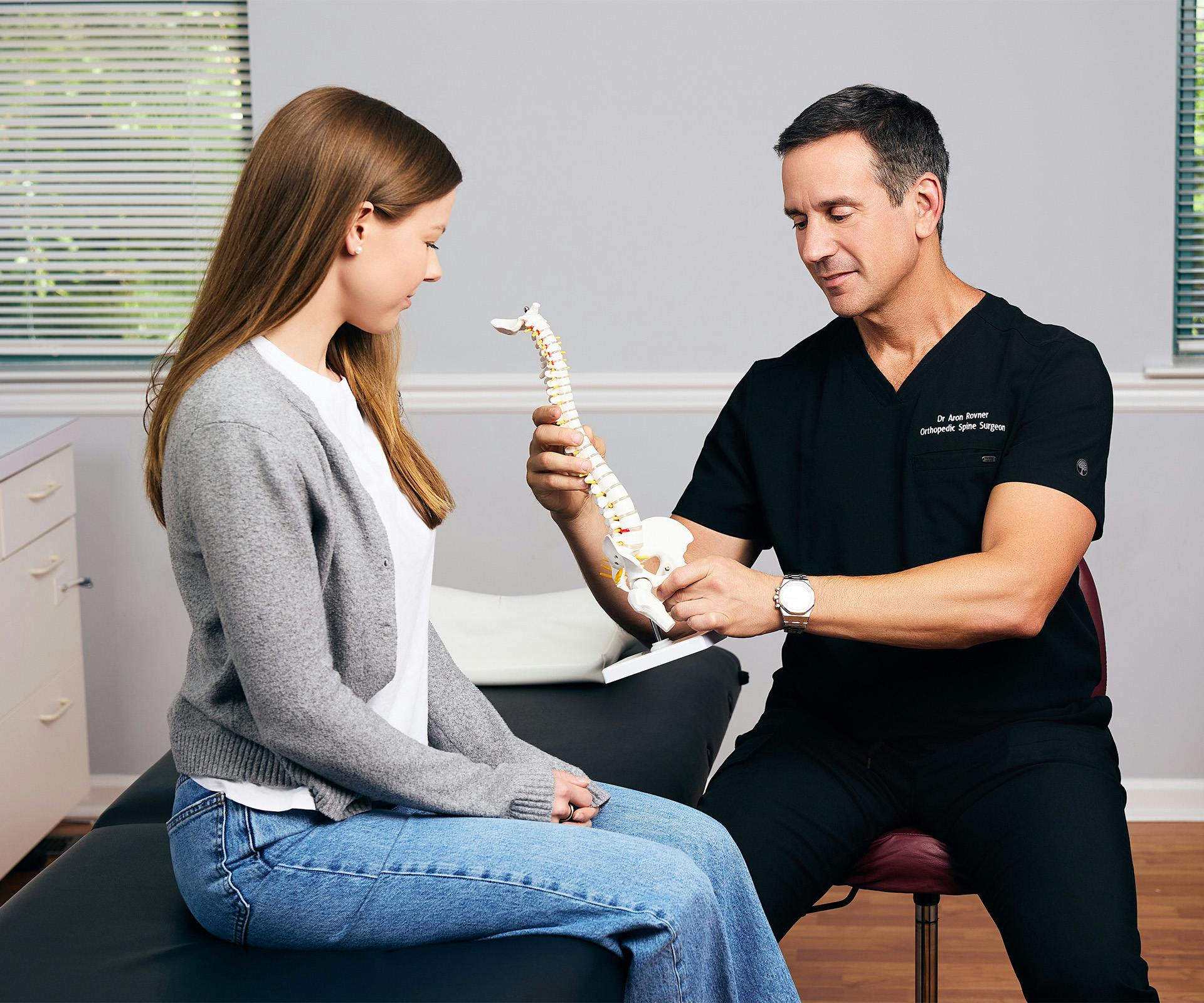
During your consultation at Core Alliance, you’ll meet one-on-one with Dr. Rovner to discuss your symptoms, review imaging, and explore all available treatments. We take time to ensure you fully understand your diagnosis and all your options—both surgical and non-surgical—so you can move forward with confidence.

“I worked with Dr. Rovner on my back pain. He is an outstanding orthopedic specialist. He is incredibly patient and takes the time to carefully ask about every symptom. He listens attentively and explains each detail clearly, making sure I understand the diagnosis and treatment plan. His medical decisions are thoughtful and well-reasoned, and I truly felt that I was in good hands throughout the entire process. I highly recommend him to anyone seeking professional and compassionate orthopedic care.”

– Xifeng Wang

Quote media

Schedule A Consultation Tailored Solutions for Every Spine

Contact Us

What to Expect During Your MIS TLIF Procedure

This procedure is performed under general anesthesia in a hospital or surgical center. A small incision is made in the lower back, and tubular retractors are used to access the spine while sparing muscle. Dr. Rovner removes the degenerated disc and inserts a bone-filled cage into the space to promote fusion. Screws and rods are then placed to stabilize the spine.

The surgery typically takes two to three hours. Because it is minimally invasive, patients are often able to walk the same day and return home within 24 hours. Incisions are closed with sutures or surgical adhesive, and follow-up instructions are provided before discharge.

What Is the Recovery Like After MIS TLIF?

Recovery after MIS TLIF is often shorter and more comfortable than recovery from traditional fusion surgery. Patients typically begin walking within hours of the procedure and are encouraged to stay mobile to aid circulation and healing.

Some mild soreness is expected but usually manageable with medication. Most individuals can resume light work and activity within a few weeks, with physical therapy introduced shortly after surgery to restore strength, flexibility, and core function. Full fusion takes several months, and Dr. Rovner will continue to monitor progress through imaging and follow-up visits.

Background media

What Is the Cost of MIS TLIF?

The cost of MIS TLIF in Long Island depends on the complexity of the case, imaging or diagnostic needs, and insurance benefits. Core Alliance works closely with PPO-insured patients and provides transparent cost estimates before scheduling. Our team will verify your insurance and guide you through all coverage-related questions.

man running on a beach

Alternatives to MIS TLIF

Not every patient requires surgery. Core Alliance always considers non-surgical interventions first, including physical therapy, epidural injections, bracing, or pain management. If surgery is necessary, alternatives to MIS TLIF may include:

  • ALIF (Anterior Lumbar Interbody Fusion)
  • PLIF (Posterior Lumbar Interbody Fusion)
  • Traditional TLIF
  • Endoscopic discectomy

Dr. Rovner will walk you through each option to ensure your treatment plan is customized to your anatomy, health goals, and lifestyle.

Banner media
Doctor media

Why Choose Core Alliance?

At Core Alliance, we take pride in offering patients on Long Island personalized care rooted in experience and minimally invasive precision.

Dr. Aron Rovner combines technical excellence with a patient-first mindset to ensure your procedure is as effective and streamlined as possible. If you're ready to explore MIS TLIF in Long Island, contact us today to take the next step toward lasting relief.

Frequently Asked Questions Minimally Invasive TLIF

How long does the fusion take to fully heal after MIS TLIF?

Fusion usually completes within 6 to 12 months, depending on your overall health and recovery plan.

Will I need physical therapy after MIS TLIF?

Yes, physical therapy supports recovery by strengthening muscles, improving mobility, and preventing future strain.

Are the screws and rods permanent?

In most cases, the hardware stays in place permanently unless it causes irritation or other issues.

Is MIS TLIF covered by insurance?

Most PPO plans cover MIS TLIF when medically necessary. We’ll help confirm your benefits and obtain authorizations.

Can MIS TLIF be performed at more than one level?

Yes, MIS TLIF can be adapted for multi-level procedures depending on your condition and spine anatomy.

Contact us media
Accessibility: If you are vision-impaired or have some other impairment covered by the Americans with Disabilities Act or a similar law, and you wish to discuss potential accommodations related to using this website, please contact our Accessibility Manager at (516) 588-7731.
Contact Us